

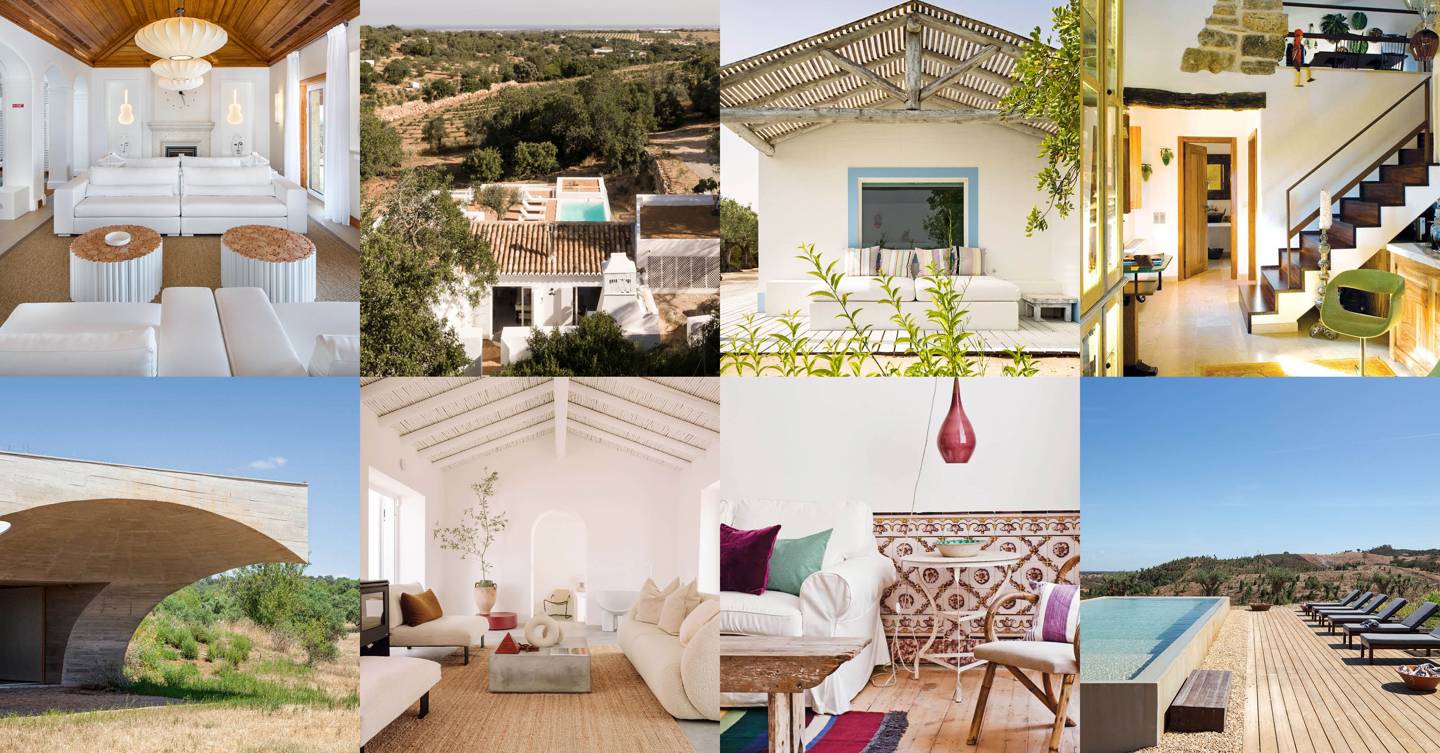
Portugal’s strength is its simplicity, just like the fresh fish that comes straight from the sea here, served with only a sprinkling of salt and a drizzle of olive oil, and no sauce. Or the minimalist whitewashed houses whose exteriors, contrasting starkly against a fierce blue sky, create a pleasure far more visceral than the Baroque masterpieces. Get your house right, allow Portugal under your skin – its unique light, its warm culture, its simple authenticity – and you will fall prey to the saudade, or longing, that the Portuguese sing about in their melancholic fado, and return time and again. Here are some places to start…


CAMPO DE ARROZ, COMPORTA
This wild stretch of Atlantic coast, an hour and a half south of Lisbon, spent generations unnoticed before being snapped up by Portugal’s most powerful banking clan, which ensured strict rules for anyone intending to build a house here. These days, a select band of architects are finding inspiration in the area’s unusual scenery – storks nest on every other telephone pylon – and the homespun vernacular of whitewashed fishermen’s huts and horizontal-striped, woven-reed exteriors topped with palm-frond roofs. Regulars will tell you that the best way to experience Comporta is to rent a house. And this one, a family-friendly project that sleeps 10, makes the most of its views over rice fields that flick from water-logged to luminous green as the seasons change. From the stripped-down main bedroom, which has poured-concrete floors, wooden ladders and shaggy, palm-fibre lampshades, there’s a view of the sunrise over the fields, punctuated only by the orange trees in the garden. Outside is a huge barbecue with a pergola-sheltered table, and a swimming pool to leap into. The other way, the dense forest backdrop is filled with umbrella pines and gnarled cork trees. Without this place’s sandy, wooden decking, it would be easy to forget it’s so close to the beach. But just behind the treeline are miles of unspoilt caster-sugar dunes. From Carvalhal it’s walking distance to Pego for lunch at Restaurante Sal, where locals pull on their Sunday best to feast on grilled fish, octopus-ink rice and endless rosé. This is a great spot to go off-grid in the same way the savvy crowd have been doing for decades.

MONTE DA PALMEIRA, SAO BRAS DE ALPORTEL, ALGARVE
Be warned, you will fall under the spell of this house, for charm curls around it like the tendrils of the wisteria that hangs heavy above the shaded dining table. It is an old farmhouse, restored with love by current owner Antonia, who has carefully sourced Portuguese antiques to set against the sun-dappled white interiors, creating a real sense of place. Sloping ceilings are lined with reeds in the traditional Algarvian way and painted white; floors of ancient tiles are cool underfoot. Wrought-iron beds come swathed in muslin mosquito nets; bathrooms are in dusty-pink Portuguese marble; and bedrooms have little terraces perfect for that first cup of coffee as the sun rises. Outside, through a garden of lemon, orange, olive and fig trees, a pool awaits, and bordering it is a one-bedroom cottage, perfect for noisy teenagers. Unspoilt countryside stretches all around you and in the distance you can see the sea.

Casa Da Volta
ALEXANDRE RAMOS
CASA DA VOLTA, GRANDOLA, ALENTEJO
Designed by acclaimed Lisbon-based Promontório architects, Casa da Volta reimagines the ancient Portuguese practice of fortification, creating a gravelled inner courtyard onto which all rooms in the house open. Here faded pitchers and sharp cacti cast silhouettes against the whitewashed walls under a beating sun. Here too, under a leaning tree at a large table, is where António from caterers Twopack Kitchen might serve his grilled prawns, dusted with spices, straight from the barbecue. Walk through the superbly equipped kitchen, or the sitting room decorated with tribal headdresses and ceremonial weapons, out to the swimming pool. Olive trees and wildflowers stretch as far as you can see; sunbeds border one side of the pool, deckchairs (with inbuilt pillows) line up in the shade of the house. ‘Da Volta’ means to return and that, for sure, you will want to do.

Casa Um
Francisco Nogueira
CASA UM, TAVIRA, ALGARVE
In the tranquil eastern Algarve, amid meadows scattered with wildflowers, an old shepherd’s house has been reimagined as a holiday home with four bedrooms, contemporary in style, tucked into the slope of the land beneath it. The main house offers a sitting room, with log burner for winter evenings, a dining room and a kitchen with a wine fridge – filled with enticing Portuguese bottles by the wine-merchant owner. There is a little terrace off the house on one side, allowing meals in the shade of the latticed Algarvian chimney. On the roof is a swimming pool, overlooking the gardens of lavender and carob trees. A concierge, Mario, will organise your life – book restaurants, arrange cooks for special dinners, scoop up laundry – allowing you to lie back and listen to the cicadas.

CASA DA MUSICA, BOLIQUEIME, ALGARVE
This is an ideal base for families with children: teenagers will be kept happy by the snooker and table tennis in the games room, toddlers by the dedicated children’s swimming pool. Sleeping 14 in seven bedrooms, the villa sits on vast, lush lawns and has sweeping views over the countryside to the sea. It’s one of a cluster of villas owned by rental company Shantivillas near Boliqueime, a pretty, unspoilt, whitewashed village built around a church where locals still gather for coffee under the jacaranda tree. Casa da Musica embraces the music theme with gusto, with bedrooms named Do, Re and Mi and keyboards among the contemporary furniture. There are two sitting rooms, one with a television, allowing children and adults to each do their own thing – the key to a happy holiday.
Sleeps: 14
Price: From about £830 a night (early bird rate)
BOOK YOUR STAY

CASA NA TERRA, ALENTEJO
This subterranean lair in Portugal‘s Alentejo is a double-take hideaway that emerges from the remote landscape. This part of the country, which borders the Spanish deserts of Extremadura, is famed for its fortress towns and pretty villages of white-and-cobalt cottages. But Casa na Terra conforms to no vernacular. A bunker, almost buried in the ground and barely visible even from up close, it is an alien structure in this land. The building looks like nothing ever seen before: hyper-man-made yet totally in sync with the surroundings. Its spaces are part of the terrain – very little emerges. As you approach, the green roof looks as if it’s another natural slope, only the white circular courtyards that act as light wells mark out that this is an artificial construction. From beside the lake, you occasionally glimpse the dome of the terrace – the focal point – but it looks elemental, forgotten, a thing that has been here forever. Inside, minimalist concrete-and-wood interiors and three sparsely fitted-out bedrooms are embraced by the heaviness of the earth. Being hidden away like this provides a sense of protection.
Sleeps: Up to 6
Price: £315 per night for two and about £45 per additional person (minimum stay three nights)
BOOK YOUR STAY
See the full review of Casa na Terra

Casa Pego, Comporta, Portugal
CASA PEGO, COMPORTA
Tapping into the barefoot, salty-haired vibe of Portugal’s coolest holiday destination used to be an exercise in knowing the right people. The best beach shacks were privately owned, and only for friends of friends. Now though, in addition to a number of new hotel openings, the top spots can be infiltrated. This low-slung six-bedroom villa, right behind the high dunes of Pêgo beach in Comporta, is as close as you can get to having your toes in the water. Olive groves and wild pines surround three separate cabanas – ideal for giving grandparents or older siblings a bit of space – that are linked by sandy pathways; there’s no need to bring shoes. Inside, floors are smooth polished concrete and sun-bleached driftwood informs the styling. And while the kitchen is fully kitted out, the house is within walking distance of the gorgeous Sal Beach Club, to which the whole family can decamp for long lunches.

BAIXA HOUSE, LISBON
Jesús Moraime, Baixa House’s owner, and manager María Ulecia may be Spanish but they have both fallen in love with Lisbon and are committed to sourcing all sorts of Portuguese products for the interiors of these 13 crashpads, from the linen sheets to the wonderful Alvarez Gómez shower gels (stock up while you’re here or buy them from Cologne and Cotton in the UK). The whole place is done with incredible taste and eclectic styling; it’s full of market finds, with pottery plates on the walls, bedside lights set on stepladders and flashes of colour against the painted white backdrop. The look is a fresh take on mid-century modern, with Ercol-esque furniture alongside Seventies standing lamps, and G-Plan sideboards paired with canvas butterfly and wicker Acapulco chairs. Retro record covers are framed on the walls beside pretty botanical prints. Kitchens are stocked with gorgeous green cabbage-leaf-patterned espresso cups and cereal bowls, proper coffee machines with freshly ground beans in a jar, daily deliveries of fruit, milk, yogurts and a cake for tea time. Just-baked bread (seeded and sourdough) arrives still warm in a muslin sack that’s hung on the door handle at the crack of dawn each morning. Everything here is thoughtfully done and couldn’t be further from a cookie-cutter sensibility. Rooms are often let long-term to artists, writers and poets, and there’s a feeling of being in a creative hub. But that’s not to say this place isn’t smart, too – the cool marble bathroom floors are warmed with underfloor heating.
Sleeps: 2
Price: From about £120 per night (two-night minimum stay)
BOOK YOUR STAY
ANA ANA, PORTIMÃO, ALGARVE
Ana Ana – ‘I am’ in Arabic – is the house-atelier of artist Eric de Bruijn, whose creative eye has helped him restore and refashion what was once a boat-repair factory, as is evidenced by the hooks that still protrude from the ceiling. In its very sleek current incarnation it offers a vast open-plan ground floor where a sitting room abuts a kitchen, both decorated with de Bruijn’s lyrical, abstract art work, some of his furniture designs and a tangible sense of stillness. Outside cactuses pressed against a pink wall cast shadows onto the lap pool, while upstairs a roof terrace comes with sunbeds, a barbecue and a shaded dining table. Five bedrooms are kitted out with thick mattresses on wooden floors and roomy dressing rooms and there are bathrooms to share. For those who want to be in a town rather than by the beach and who appreciate design details, this will tick all the boxes.
Sleeps: 10 (or 12, plus £100 per night, if studio is included)
Price: From about £345 a night
BOOK YOUR STAY

Villa Pedra, Coimbra
Arriving here, after winding upwards on narrow roads that cut through wildflower meadows, is like stumbling onto a Merchant Ivory film set, so perfectly formed is the stone hamlet lost in the hills of Serra de Sicó. When the car stops, silence falls, broken only by the whistle of the wind and the distant honking of geese. Victor Mineiro, the architect of these seven fantastically renovated cottages and adjoining restaurant (local olives and wine, tremendous coriander poached fish), will appear, all smiles and warmth, with Jack Russells Olivia and Jackie at his heels. He brims with enthusiasm for a project he has spent more than a decade working on, since he and partner Manuel Casal decided to breathe new life into the abandoned village. Gardens are lush and filled with blossom; tiny wild irises, deep purple, have taken root under olive branches. There is a swimming pool and a set of yellow chairs in the shade of a medlar tree. But it is not just picture-postcard prettiness, there is also soul within these old limestone walls. Inside the little ochre- coloured houses, sunlight floods across highly polished stone floors. Portuguese porcelain, old and new, and Mineiro’s eclectic artwork sit side by side in the sitting rooms; mid-century furniture and ancient Berber rugs create a lived-in charm. Kitchens have juicers to squeeze the fresh oranges provided, the fridge is stocked with farmyard eggs and Rabaçal, possibly Portugal’s best cheese, which comes from the goats that you occasionally hear bleating across the hills, and every morning warm bread, baked in a wood-fired oven at dawn, is hung in a cloth bag on your front door. Why come here? Gather your favourite people and rent all the houses: it’s a brilliant take-the-whole-place set-up.
Keep scrolling for more images of the houses and villas
Like this? Now read:
17 of the best beaches in Portugal
6 places in Portugal to book now
The 11 best family-friendly hotels in Portugal