

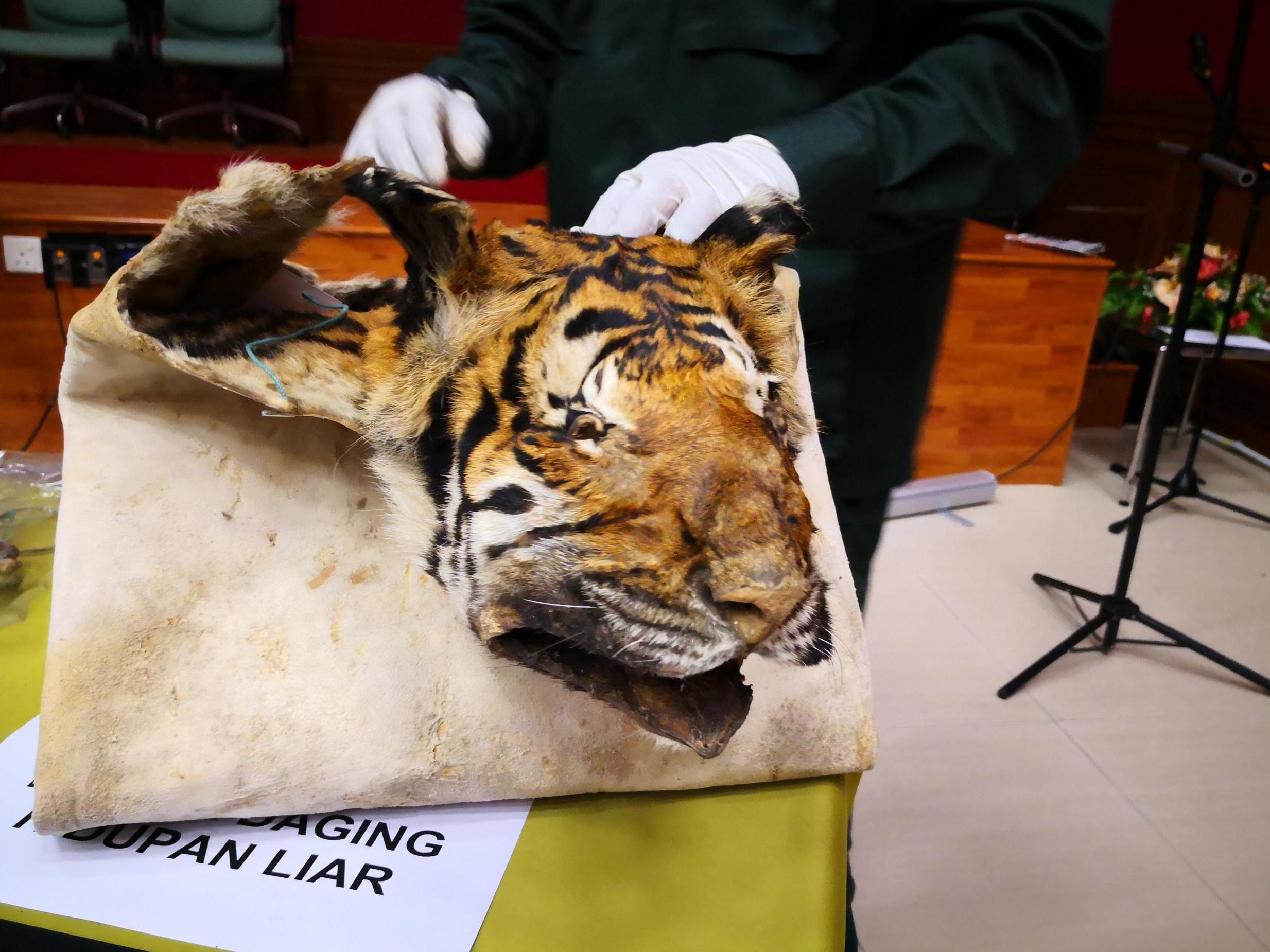

More than two carcasses of endangered tigers are being seized every week from smugglers who are driving the big cats towards extinction, research has found.
Officials in 32 countries discovered 2,359 dead tigers between 2000 and last year – a number described as a “conservative” estimate.
The figure equates to 131 animals a year – or two a week, many of them from “tiger breeding farms” whose conditions have been condemned as appalling by wildlife experts.
Wild tiger numbers have dropped both because their habitats are being destroyed and because they are hunted illegally for their skins, bones, meat and tonics for the “traditional Asian medicine” trade. Only about 3,900 remain.
In Indonesia, which has the third-highest seizure rate, a dozen skins were found earlier this month in a workshop making traditional dance masks.
1/17 Amur Leopard
Endemic to the far east of Russia, the Amur Leopard has a population of around 84 and is critically endangered. Here follows every species that the WWF lists as critically endangered.
Getty
2/17 Yangtze Finless Porpoise
Endemic to China’s Yangtze River, the Yangtze finless porpoise has an estimated population of 1000-1800
Kenichi Nobusue
3/17 South China Tiger
When discovered in the 1950s, the South China tiger population was estimated to be 4000, by 1996 it was estimated to be only 30-80. Scientists consider the tiger to be “functionally extinct” as one has not been sighted for over 25 years
4/17 Sumatran Orangutan
The Sumatran orangutan was once found across the island of Sumatra and even further south on Java. Today it is found only in the island’s north and its population stands at 14,613
Getty
5/17 Western Lowland Gorilla
Though it is the most populous of all gorilla subspecies, the western lowland gorilla is still critically endangered and its population has declined by 60% in the last quarter century
Getty
6/17 Sumatran Rhinoceros
The Sumatran rhinoceros is the smallest of the surviving rhinoceros species. Only 80 are known to be living today. The last male Sumatran rhino in Malaysia died on 28 May 2019
Willem V Strien
7/17 Sumatran Tiger
There are fewer than 400 Sumatran tigers left today. They are severely threatened by deforestation and poaching
Getty
8/17 Eastern Lowland Gorilla
Half of the rainforest of the Democratic Republic of Congo in which these gorillas live has been destroyed the past 50 years. There were 17,000 Eastern Lowland gorillas in the 1990s but scientists estimate their population has declined by over 50% since then
Getty
9/17 Vaquita
The world’s rarest marine animal has a population of only 30. They were discovered in 1958 and are endemic to Mexico’s Gulf of California
Paula Olson / NOAA
10/17 Javan Rhino
The most threatened of all rhino species, there are only an estimated 58-68 Javan rhino left
Reuters
11/17 Saola
The saola was first sighted in 1992, being the first large mammal to be discovered in over 50 years. Scientists have only sighted saola in the wild four times and it is considered critically endangered
12/17 Sumatran Elephant
The Sumatran elephant population now stands at only 2400-2800
Getty
13/17 Malayan Tiger
The Malayan Tiger population now stands at only 250-300
Getty
14/17 Hawksbill Turtle
The population of the Hawksbill Turtle has declined by more than 80% in the last century. They are threatened by black market poachers who kill them for their shell
Getty
15/17 Black Rhino
The population of the black rhino dropped by 98% in the years 1960-1995 due to poaching, it stands today at around 5000
Getty
16/17 Cross River Gorilla
The population of the Cross River gorilla has been damaged by deforestation and poaching, it now stands at 200-300
Julie Langford
17/17 Bornean Orangutan
The population of the Bornean orangutan has been reduced by over 50% in the past 60 years, now standing at around 104,700. Their habitat has been reduced by at least 50% in the 21st century
Getty
1/17 Amur Leopard
Endemic to the far east of Russia, the Amur Leopard has a population of around 84 and is critically endangered. Here follows every species that the WWF lists as critically endangered.
Getty
2/17 Yangtze Finless Porpoise
Endemic to China’s Yangtze River, the Yangtze finless porpoise has an estimated population of 1000-1800
Kenichi Nobusue
3/17 South China Tiger
When discovered in the 1950s, the South China tiger population was estimated to be 4000, by 1996 it was estimated to be only 30-80. Scientists consider the tiger to be “functionally extinct” as one has not been sighted for over 25 years
4/17 Sumatran Orangutan
The Sumatran orangutan was once found across the island of Sumatra and even further south on Java. Today it is found only in the island’s north and its population stands at 14,613
Getty
5/17 Western Lowland Gorilla
Though it is the most populous of all gorilla subspecies, the western lowland gorilla is still critically endangered and its population has declined by 60% in the last quarter century
Getty
6/17 Sumatran Rhinoceros
The Sumatran rhinoceros is the smallest of the surviving rhinoceros species. Only 80 are known to be living today. The last male Sumatran rhino in Malaysia died on 28 May 2019
Willem V Strien
7/17 Sumatran Tiger
There are fewer than 400 Sumatran tigers left today. They are severely threatened by deforestation and poaching
Getty
8/17 Eastern Lowland Gorilla
Half of the rainforest of the Democratic Republic of Congo in which these gorillas live has been destroyed the past 50 years. There were 17,000 Eastern Lowland gorillas in the 1990s but scientists estimate their population has declined by over 50% since then
Getty
9/17 Vaquita
The world’s rarest marine animal has a population of only 30. They were discovered in 1958 and are endemic to Mexico’s Gulf of California
Paula Olson / NOAA
10/17 Javan Rhino
The most threatened of all rhino species, there are only an estimated 58-68 Javan rhino left
Reuters
11/17 Saola
The saola was first sighted in 1992, being the first large mammal to be discovered in over 50 years. Scientists have only sighted saola in the wild four times and it is considered critically endangered
12/17 Sumatran Elephant
The Sumatran elephant population now stands at only 2400-2800
Getty
13/17 Malayan Tiger
The Malayan Tiger population now stands at only 250-300
Getty
14/17 Hawksbill Turtle
The population of the Hawksbill Turtle has declined by more than 80% in the last century. They are threatened by black market poachers who kill them for their shell
Getty
15/17 Black Rhino
The population of the black rhino dropped by 98% in the years 1960-1995 due to poaching, it stands today at around 5000
Getty
16/17 Cross River Gorilla
The population of the Cross River gorilla has been damaged by deforestation and poaching, it now stands at 200-300
Julie Langford
17/17 Bornean Orangutan
The population of the Bornean orangutan has been reduced by over 50% in the past 60 years, now standing at around 104,700. Their habitat has been reduced by at least 50% in the 21st century
Getty
The study, by conservation charity Traffic, said high numbers of body parts seized by officials came from captive sources – dubbed “tiger farms” – where the animals are bred to feed demand for parts in east Asia.
More than half (58 per cent) of the tigers seized in Thailand and 30 per cent in Vietnam came from such breeding facilities, which are considered to stimulate demand for the animal products.
Most of Vietnam’s trafficking cases involved carcasses from Laos, which sits between Thailand and Vietnam, where the report authors suspect populations of tigers are bred in captivity.
“Seizures of tigers from captive facilities serve as a stark reminder that such facilities seriously undermine conservation efforts to safeguard this species and provide opportunities for laundering and other illegal activities,” said Ramacandra Wong, from Traffic in southeast Asia.
Tigers, which are found in 13 states across Asia, are classed as endangered by the IUCN Red List of threatened species.
On average almost 58 whole skins were seized each year.
India, with the world’s largest wild population of the big cats, had the highest number of seizures, accounting for more than one in four (626) over the 18 years.
The yearly average seizures in Indonesia rose four-fold in that time, the report said.
The trade “undermines the international commitments made to double the number of wild tigers by 2022, and… even a low level of offtake from populations above natural mortalities could be hugely detrimental to tiger populations,” said Kanitha Krishnasamy, the charity’s southeast Asia director.
“Such a high number of tigers entering illegal trade is unacceptable.”
The study coincides with discussions on the trade in big cats at the Convention in International Trade in Endangered Species of Wild Fauna and Flora (Cites).
“The fact that more and more are linked to captive facilities, including some that have crossed borders in trade, shows a disregard for decisions and commitment made at the highest level under Cites,” Ms Krishnasamy added.
“We have done these analyses four times now, and year on year, it’s more bad news for tigers.”
Last month Vietnamese authorities seized seven frozen carcasses from a vehicle in Hanoi from a suspect believed to have smuggled tigers from Laos for years.
Seizures were also made in Taiwan and Mexico.