

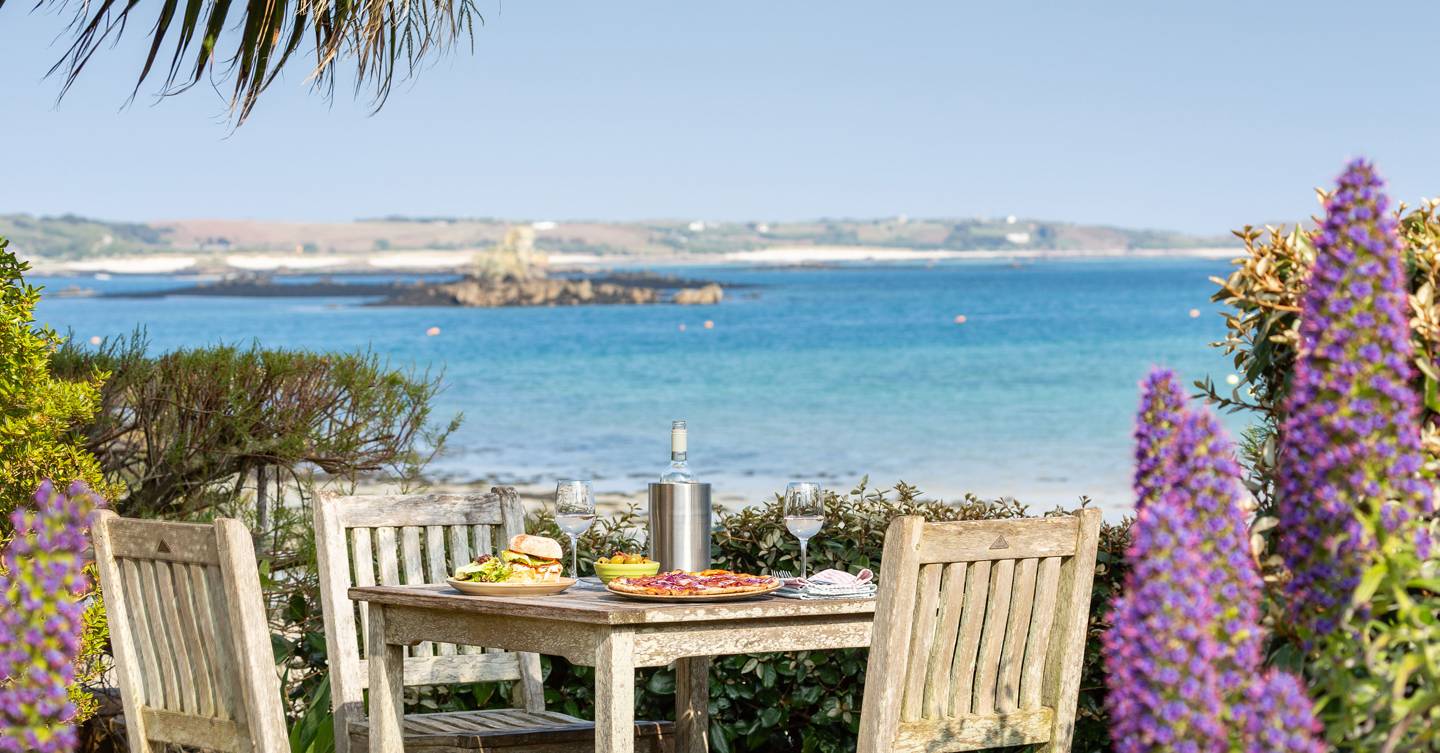
If hell is other people, heaven is the Isles of Scilly. Here, 28 miles to the west of Cornwall’s Land’s End, is an archipelago that will make your heart leap. It’s like Cornwall before the boom in second-home owners, where islanders welcome you like long-lost friends, where the ice-cream-white beaches are deserted and the air smells like sun-drenched salt and sweet narcissi. For every dazzling wild marigold, there’s an honesty box, teeming with home-grown vegetables, just-laid eggs and crumbly fudge, spread out like a village fete’s prize-winning produce.
It is on these islands that the mundane tortures of everyday life are quickly erased, because here the pace is slower and the people are friendlier. Days are often miraculously filled with unbroken sunshine and the night skies, free from the city-light pollution, are inky and glowing. For anyone who visits, it’s a revelation. Like the gentle ebb and flood of the tide, you can’t help but vow to return.
The Isles of Scilly are made up of more than 140 islands, five of which are inhabited. The rest are a happy haven for nesting storm petrels and manx shearwaters. Each island has a distinct and different feel: St Mary’s is the largest with its capital, Hugh Town, the administrative seat; Tresco is the well-groomed family favourite that’s been leased to the Dorrien-Smith family by the Duchy of Cornwall since 1834; then there’s wild and rugged Bryher, quaint, flower-filled St Martin’s and soothingly remote St Agnes.
To explore, you should spend a week or two hopping your way around their translucent blue waters, experiencing the very best of what these islands have to offer. This is the UK, but not as you know it.

When is the best time to visit the Scilly Isles?
The Isles of Scilly have some of the mildest and warmest conditions in the UK. Even off season, frost on Scilly is rare and spring arrives early, hedgerows bursting with Bermuda buttercups and carpets of bobbing white wild garlic sprouting at the sides of almost every border. July and August bring more visitors due to reliably good weather, but you’ll almost always still find the beaches quieter than the mainland. September is usually filled with cloudless skies, the hazy, late-summer feeling still clinging on. Come October the temperatures begin to drop, the first golden touches of autumn are in the air and this is the month the birdwatchers flock to the islands in large numbers. From November, most of the restaurants and hotels go into slumber until early April.