

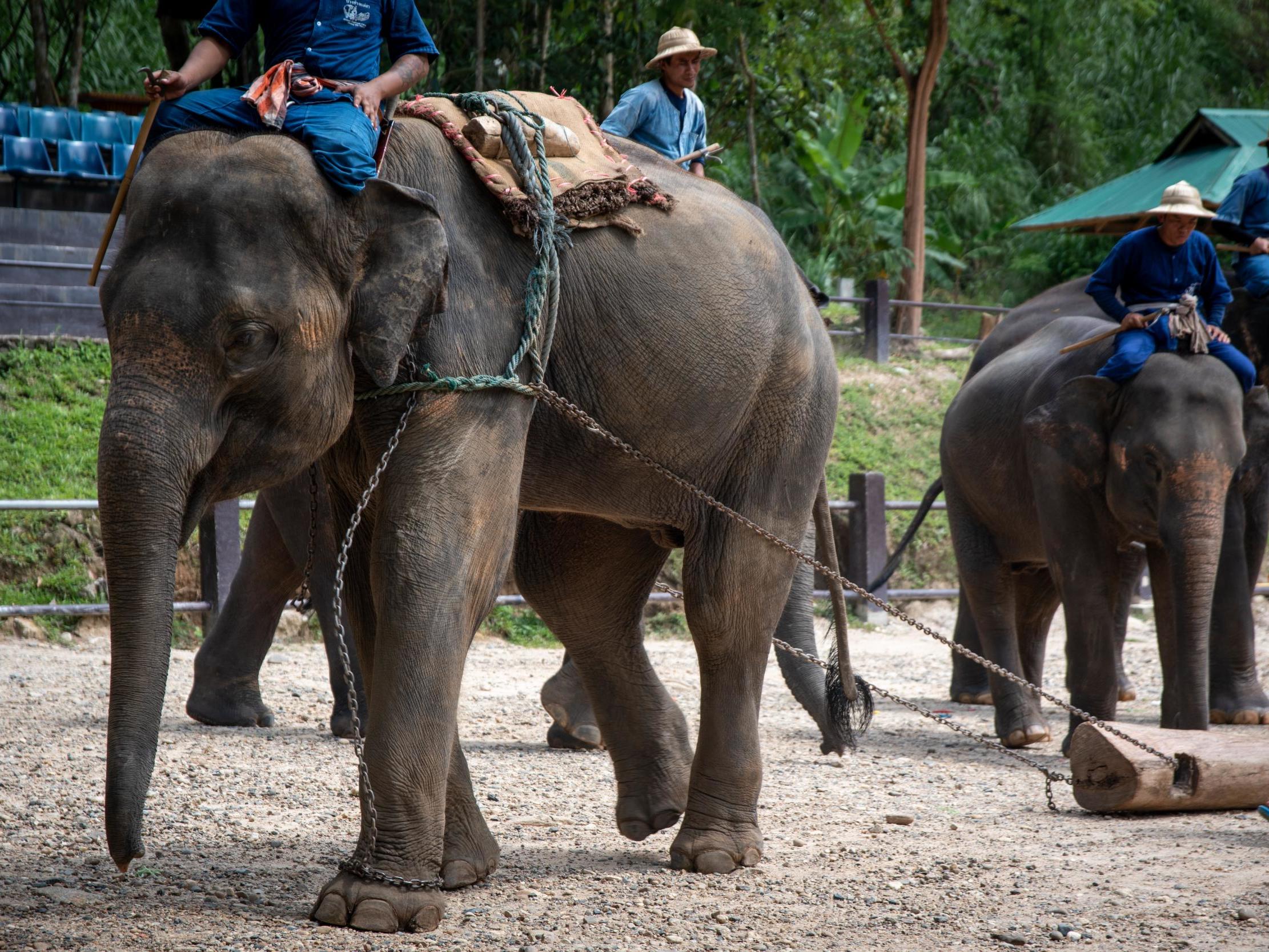

Tourists are funding an Asian elephant camp where baby animals are hit and scraped by sharp metal hooks, chained up and forced by fear of punishment to perform tricks, an investigation has found.
Witnesses branded the centre “the elephant nursery from hell”, as they described how they filmed young elephants being pulled by their delicate ears, swaying “in distress” and being forced to carry people on their backs.
They accuse the Maesa Elephant Nursery in northern Thailand of being a “baby-making factory” where mothers are often relentlessly “bred”, spending much of their lives in repeated pregnancies. Expectant mothers are even forced to perform, the investigators say.
The training and treatment leaves the creatures “psychologically broken and suffering immensely”, it is claimed.
More than 20 of the creatures are made to perform tricks such as “painting” and kicking a football three times a day, often still in chains, according to the investigators from the Moving Animals group.
1/10
At the Mahouts Elephant Foundation in Thailand, endorsed by World Animal Protection, visitors can observe elephants in their natural environment
World Animal Protection
2/10
At the Mahouts Foundation elephants can be watched foraging for food
World Animal Protection
3/10
MandaLao Elephant Conservation in Laos, endorsed by World Animal Protection
World Animal Protection
4/10
MandaLao is home to elephants rescued from the holiday industry
World Animal Protection
5/10
Boon Lott’s Elephant Sanctuary in Thailand is endorsed by World Animal Protection
World Animal Protection
6/10
At Boon Lott’s, visitors can watch animal families bathing
World Animal Protection
7/10
Boon Lott’s is a safe haven for 14 elephants abused in tourism
World Animal Protection
8/10
The Mahouts Foundation in Thailand
World Animal Protection
9/10
The Mahouts Foundation in Thailand
World Animal Protection
10/10
The Mahouts Foundation in Thailand
World Animal Protection
1/10
At the Mahouts Elephant Foundation in Thailand, endorsed by World Animal Protection, visitors can observe elephants in their natural environment
World Animal Protection
2/10
At the Mahouts Foundation elephants can be watched foraging for food
World Animal Protection
3/10
MandaLao Elephant Conservation in Laos, endorsed by World Animal Protection
World Animal Protection
4/10
MandaLao is home to elephants rescued from the holiday industry
World Animal Protection
5/10
Boon Lott’s Elephant Sanctuary in Thailand is endorsed by World Animal Protection
World Animal Protection
6/10
At Boon Lott’s, visitors can watch animal families bathing
World Animal Protection
7/10
Boon Lott’s is a safe haven for 14 elephants abused in tourism
World Animal Protection
8/10
The Mahouts Foundation in Thailand
World Animal Protection
9/10
The Mahouts Foundation in Thailand
World Animal Protection
10/10
The Mahouts Foundation in Thailand
World Animal Protection
The camp attracts tourists from around the world who want to get close to the gentle giants.
But critics say that behind the scenes the animals are controlled with painful hits from metal bullhooks and often sway back and forth, which animal experts agree is a sign of mental distress.
The babies are bred into lives of captivity after females are artificially inseminated, spending 18-22 months pregnant.
Calves are taken away from their mothers when they are two years old, then put into phajaan, a training process known as “the crush”, used across Asia to “break a young elephant’s spirit”.
“Under phajaan, elephants are bound with ropes, confined in tight wooden structures, starved, and beaten repeatedly with bullhooks, nails, and hammers until their will is crushed,” National Geographic has reported.
Moving Animals says the calves are forced this way to become money-making performers to entertain tourists, who pay to see calves at the nursery, then watch older elephants perform “cruel” tricks including:
- painting pictures while their mahout pinches their delicate ears to guide the paintbrush
- throwing sharp darts at balloons
- kicking footballs into goals
- performing an “excruciating” recreation of the now-illegal logging industry, pulling and stacking heavy logs
The UK government is considering banning elephant riding adverts and ticket sales after campaigning by Moving Animals and Save the Asian Elephants.
The camp, which has been running for 43 years, and has more than 80 elephants in captivity, did not respond to requests from The Independent to comment. But its website says elephants cannot be released into the wild as they would be at risk from farmers protecting their crops and from landmines.
It says the elephants are used to being chained, which prevent them from straying, and that hooks are used only by mahouts in defence of his own life.
But the footage shows at least one trainer using a bullhook to make elephants comply.
Amy Jones, of Moving Animals, said: “Our investigations across Asia have repeatedly shown elephants face relentless physical and emotional suffering to take part in rides, processions and performances.
“It is heartbreaking to think these innocent babies at Maesa Elephant Nursery are at the start of a lifetime of captivity that will feature sharp bullhooks, cruel performances, and severe psychological stress.”
She accused travel companies of misleading tourists. “To save another generation of baby elephants from a lifetime of misery, Defra [the environment department] must act now and ban British companies from selling tickets to elephant ‘attractions’.”
National Geographic’s witness account went on: “When a baby is about two years old, they say, mahouts tie its mother to a tree and slowly drag the baby away. Once separated, the baby is confined.
“Using a bullhook on its ear, they teach the baby to move: left, right, turn, stop. To teach an elephant to sit, Sala-ngam says, ‘we tie up the front legs. One mahout will use a bullhook at the back. The other will pull a rope on the front legs.’”